February is Children’s Dental Health Month, a time dedicated to raising awareness about the importance of building strong, healthy smiles from an early age. We sat down with Dr. Taliah Khan of Florham Park Smile Lounge to talk about why early dental care matters, how positive experiences at the dentist can shape lifelong habits, and the ways her team supports both parents and children in learning proper oral hygiene. From first visits to everyday routines at home, Dr. Khan shares practical guidance and reassurance to help families feel confident about caring for their children’s smiles in our interview below.
February is Children’s Dental Health Month — can you tell us what that means and why it’s such an important time to focus on kids’ smiles?
Children’s Dental Health Month is a wonderful reminder for moms that the little things we do every day truly matter. So many lifelong habits start early — and that includes oral health. Baby teeth are incredibly important. They hold space for adult teeth, guide proper development, support speech, and allow your child to eat comfortably. When we protect those tiny teeth, we’re protecting their future smile. I always tell moms: the earlier we build simple, positive routines at home, the easier it is when permanent teeth arrive. Prevention now means fewer worries later.
At what age should parents first bring their child to the dentist?
I recommend bringing your child when their first tooth appears, or by their first birthday. That first visit is really for you, Mom. It’s a chance to ask questions, learn what’s
normal, talk about nutrition, pacifiers, teething — and leave feeling confident. For your child, it’s simply about positive exposure. When children grow up seeing the dental office as a friendly, safe place — not a place they only go when something hurts — it dramatically reduces anxiety. My goal is always prevention, so your child rarely needs treatment in the first place.
What are the most common dental issues you see in kids here in our community?
The biggest pattern I see isn’t just cavities — it’s children coming in for the first time only when they’re already in pain. Without a consistent dental home, kids often associate the dentist with discomfort. That makes it much harder for them to feel safe in the chair. When we build a relationship early — before there’s a problem — children learn to trust us. And moms feel supported instead of stressed. That relationship makes all the difference.
Let’s talk brushing battles — how can parents make brushing and flossing easier at home?
First — if brushing feels like a battle sometimes, you are not alone. Every mom has been there. For older kids, tying brushing to a favorite song works beautifully. They brush until the song ends — it naturally gives them enough time without it feeling like a chore. For younger children, a “tell-show-do” approach helps. Show them on a stuffed
animal or on yourself first. Let them try. Then gently take over to finish. A rule I share: If they can’t tie their shoes yet, they can’t brush independently yet. They can practice — but you still need to finish the job.
For infants and toddlers, laying them in your lap and brushing from above (where they can see your face) often makes the experience calmer and more cooperative.
How much toothpaste should kids actually be using? And does it matter if it’s fluoride or fluoride-free?
For children under 3, use a rice-sized smear. Over 3, a pea-sized amount is perfect. Fluoride is an excellent tool for strengthening enamel and lowering cavity risk —
especially if there’s a family history of cavities or other risk factors. That said, I respect that every family has different comfort levels. If you prefer to avoid fluoride, options like nano-hydroxyapatite toothpaste exist. My approach is always collaborative — we look at your child’s specific risk factors and make a decision together that aligns with your values and protects their smile.
We always hear mixed things about thumb sucking and pacifiers. When should parents start to worry?
Thumb sucking and pacifiers can both affect jaw development and tooth positioning if they continue too long. Pacifiers are ideally phased out around age 2. Thumb sucking is tougher since it’s always available, but we try to gently discourage it by ages 4–5.
What’s most important is understanding why your child is doing it. Often it’s a comfort mechanism. Addressing the emotional component makes the habit
easier to reduce. And I always reassure moms: occasional soothing behaviors — like a child who briefly sucks their thumb to fall asleep but removes it — are usually far less
concerning than constant daytime habits.
Snacks are a big part of kid life — what foods are secretly harming teeth, and what are some smile-friendly swaps parents can try?
Many moms are surprised to learn that crackers like Goldfish can be tougher on teeth than candy. Starchy snacks break down into sugars, and when they turn
sticky, they sit deep in the grooves of teeth — exactly where cavity-causing bacteria thrive. Frequency matters just as much as sugar content. Smile-friendly swaps include cheese sticks, yogurt cups, fresh fruits and vegetables, hummus, and nuts (if age-appropriate). I’m never about perfection — just balance. Pairing snacks with meals and offering water afterward makes a big difference.
Florham Park Smile Lounge offers dental presentations at local schools — can you tell us what those look like and how they help kids feel more confident about going to the dentist?
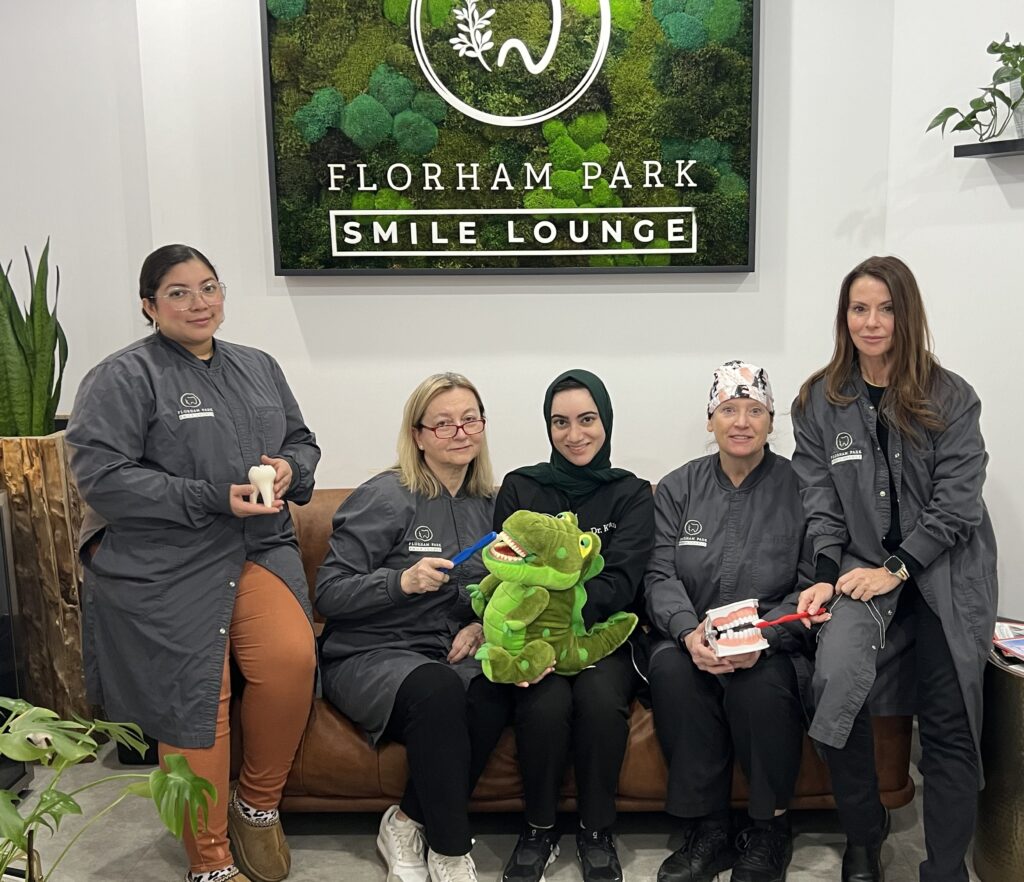
Sure! Our school visits are designed to make dentistry feel fun and familiar. Each child gets to practice brushing “Dino’s” teeth — my stuffed animal with a
full set of teeth — so they build confidence in a hands-on way. We read Bear’s Loose Tooth and talk about wiggly teeth so losing that first tooth feels exciting, not scary. We also do an interactive snack activity that visually shows how sticky and sugary foods affect teeth. Kids love it — and they truly understand it and want to make good choices.
For kids who are nervous about dental visits, what do you do to help them feel comfortable and safe?
I meet every child exactly where they are. We start with a stuffed animal and a toothbrush so the spotlight isn’t immediately on them. They get to “be the dentist” first. That sense of control is powerful. We talk about “counting teeth,” “cleaning sugar bugs,” and use kid-friendly language for all our tools. Nothing is a surprise. If a child is very nervous, I don’t force it. Even a smile or giggle is enough for me to do a basic evaluation. Building trust is more important than finishing everything in one visit. I prioritize their child’s emotional comfort to create trust — and that trust makes each future visit smoother.
If you could give parents just one simple tip to protect their child’s smile this year, what would it be?
Brush before bed — and only water afterward. Nighttime brushing is the most important habit you can build. It clears away the day’s snacks and gives you the time to be thorough without rushing. It may feel small, but that one consistent routine can dramatically reduce cavities and set your child up for lifelong oral health. And remember — you don’t have to do this perfectly. You just have to do it consistently. You got this!
This interview was done in partnership with Florham Park Smile Lounge, be sure to follow both Dr. Imran Uddin and Dr. Taliah Khan on Instagram below: